Quinn Lehmann · 6 September 2026
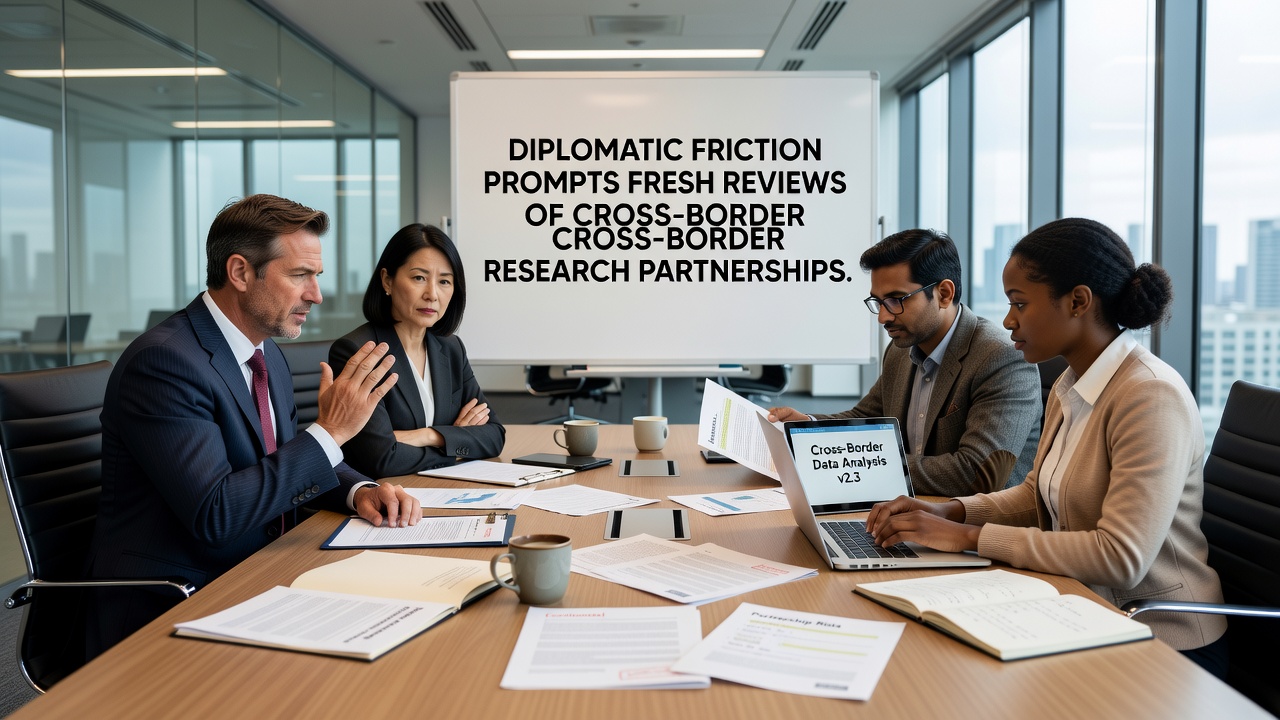
Diplomatic Friction Prompts Fresh Reviews of Cross-Border Research Partnerships
Diplomatic tensions between major global powers have triggered systematic reassessments of research partnerships that span national borders, and governments in multiple regions now examine existing agreements for security risks and strategic alignment. Data from international science organizations show that collaborative projects in fields such as artificial intelligence, quantum computing, and biotechnology account for significant portions of cross-border funding, yet recent policy shifts have introduced new layers of scrutiny. Observers note that these reviews gained momentum after several high-profile incidents involving technology transfer concerns, and September 2026 marks the point where several nations scheduled formal evaluations of ongoing joint initiatives.
Background on Cross-Border Research Networks
International research partnerships have expanded steadily since the early 2000s, with data from the Organisation for Economic Co-operation and Development indicating that co-authored scientific papers involving researchers from different countries rose by more than 50 percent between 2010 and 2024. These collaborations often receive support through frameworks such as the European Union's Horizon Europe program and equivalent initiatives in North America and Asia, and they facilitate shared access to specialized facilities and datasets. Researchers at institutions in the United States, Canada, Australia, and member states of the European Union have participated in thousands of such projects, while funding agencies track outputs through metrics that include patent filings and citation counts.
Recent Diplomatic Developments and Their Impact
Tensions arising from trade disputes and technology export controls have prompted several governments to revisit the terms of research agreements signed in previous years. The United States Department of State released guidance in 2025 that encouraged federal agencies to assess foreign involvement in sensitive research areas, and similar directives appeared in policy documents from Australian and Canadian authorities. These measures focus on protecting intellectual property and preventing unauthorized access to critical technologies, yet they also require institutions to document the origins of funding and the nationality of participating personnel. Partnerships that once operated under streamlined approval processes now encounter extended review periods, and project timelines have shifted accordingly in multiple documented cases.

One study released by the National Science Foundation highlighted that delays in joint grant approvals increased by 18 percent in the twelve months leading up to September 2026, while European Commission reports documented comparable trends within Horizon Europe consortia. Those who manage large-scale projects report that compliance documentation now consumes additional administrative resources, and some teams have restructured their consortia to limit participation from countries under heightened scrutiny. The adjustments reflect efforts to maintain scientific progress while addressing governmental requirements for transparency and risk mitigation.
Case Examples from Affected Fields
Research in semiconductor design provides one illustration of how diplomatic friction influences partnership structures. Teams that previously combined expertise from institutions in Taiwan, Germany, and the United States have adjusted their collaboration agreements to incorporate additional security protocols, and funding bodies now require explicit statements on data handling procedures. In the life sciences, partnerships involving genomic databases have undergone parallel reviews after regulators in several jurisdictions expressed concerns about access controls. Observers point to instances where projects were paused until revised memoranda of understanding satisfied updated national guidelines, and these pauses have affected publication schedules and clinical trial coordination.
Responses from Research Institutions and Funding Bodies
Universities and research centers have established internal review committees to evaluate existing and proposed international agreements, and these bodies consult with legal and security experts before endorsing new collaborations. The Australian Department of Education, Skills and Employment issued updated guidelines in mid-2026 that align with similar frameworks adopted by Canadian federal agencies, and both sets of recommendations emphasize due diligence on partner affiliations and technology transfer risks. Funding organizations have introduced training modules for principal investigators, and these programs cover regulatory changes across different jurisdictions without prescribing specific outcomes. Institutions report that such measures help maintain eligibility for public grants while satisfying oversight requirements.
Implications for Future Collaborations
Analyses from the OECD and comparable bodies project that cross-border research activity will continue, although the composition of partnerships may shift toward countries with aligned regulatory environments. Data on co-authorship trends suggest that researchers are exploring new configurations that incorporate additional safeguards, and some projects now include clauses that allow for periodic reassessment of terms. Governments have signaled willingness to support collaborations that demonstrate clear mutual benefits and robust compliance frameworks, and this approach appears in policy statements issued by multiple agencies through September 2026. The resulting landscape features more formalized documentation requirements alongside continued emphasis on scientific exchange.
Conclusion
Diplomatic friction has produced measurable changes in the administration of cross-border research partnerships, and the reviews initiated in September 2026 represent one stage in an ongoing process of adjustment. Government agencies, funding organizations, and research institutions continue to refine their approaches based on available data and regulatory updates. The focus remains on balancing the benefits of international scientific cooperation with the requirements of national security and policy alignment, and the outcomes of current evaluations will shape the structure of future projects across multiple disciplines.