
Elena Walter · 20 September 2026
Regional Disparities Shape Homeownership Access in UK Localities
Official statistics reveal clear differences in homeownership rates between UK local authorities, with southern regions often showing lower ownership levels compared to parts of the north and Scotland, and these patterns trace back to housing supply, income levels, and historical development trends that continue to influence current opportunities.
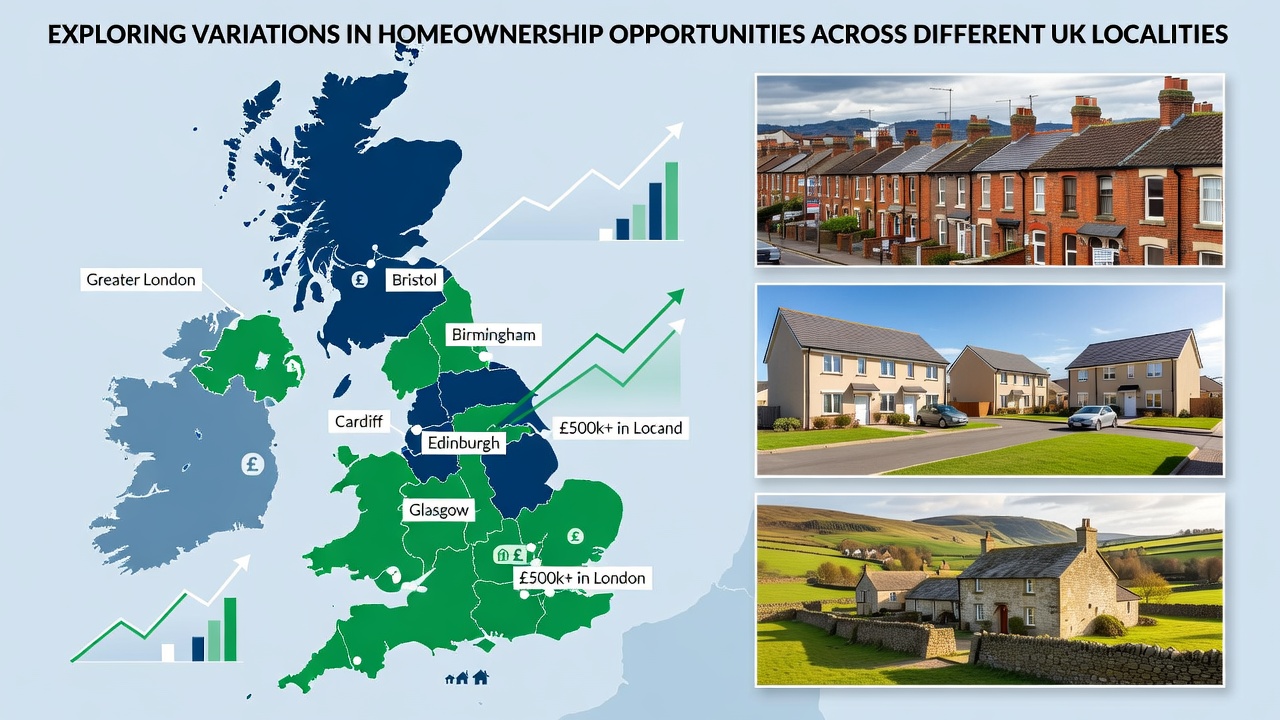
According to figures compiled by the Office for National Statistics, owner-occupation stands at around 63 percent nationally, yet London boroughs frequently report rates below 50 percent while certain districts in the North East and Scotland exceed 70 percent, and this spread reflects both property prices and the availability of suitable stock for first-time buyers.
Price Pressures and Local Market Conditions
Average house prices in London reached multiples of local earnings that far exceed those recorded elsewhere, with data from the Land Registry showing median values surpassing £500,000 in many capital boroughs during 2025, whereas equivalent figures in areas such as County Durham or parts of Wales stayed closer to £150,000, allowing residents there to enter ownership at younger ages and with smaller deposits.
Supply constraints play a direct role in these variations, since planning permissions and new-build completions move at different speeds across authorities, and researchers tracking the English Housing Survey note that green-belt restrictions around major southern cities limit new construction while northern towns benefit from greater land availability and regeneration schemes.
Government Schemes and Their Uneven Reach
Shared ownership and Help to Buy initiatives have produced measurable uptake in some localities but limited traction in others, with Homes England reports indicating higher take-up in the Midlands and North where price-to-income ratios remain more manageable, whereas London participants often face longer waiting lists and higher equity requirements that reduce overall effectiveness.
Local authority housing strategies further widen these gaps, as councils in high-demand areas allocate more resources to affordable rental stock while those in lower-pressure zones promote outright ownership through discounted sales of former social homes, and the result appears in divergent tenure profiles that persist across generations.
Demographic and Employment Influences
Employment stability and wage growth also correlate strongly with ownership outcomes, since areas dominated by public-sector or manufacturing jobs tend to show steadier progression into ownership than those reliant on gig economy or service-sector work, and longitudinal studies from university housing research groups confirm that these economic structures affect both deposit accumulation and mortgage approval rates.
Migration patterns add another layer, with younger adults moving toward urban centres for education and early careers before returning to home regions for family formation, and this cycle contributes to lower ownership in city centres while boosting demand in surrounding commuter belts where prices have risen accordingly.
September 2026 Data Releases and Emerging Trends
Updated tenure statistics scheduled for release in September 2026 are expected to incorporate the latest census adjustments and post-pandemic mobility data, allowing analysts to track whether recent interest-rate changes have narrowed or widened the gaps between regions, and preliminary modelling from the UK Housing Review suggests modest convergence in some northern localities alongside continued pressure in southern hotspots.
International comparisons provide useful context, with a Statistics Canada housing report highlighting similar regional disparities in Canadian provinces, and observers note that UK patterns align with those seen in other advanced economies where capital cities concentrate both opportunity and cost.
Conclusion
Local variations in homeownership continue to reflect the interplay of price, supply, policy, and economic structure across UK authorities, and ongoing data collection will clarify whether targeted interventions succeed in reducing these differences or whether structural factors maintain the current distribution.